
Why Belly Fat Gets Worse After 40 ( The Real Reason)
This post contains affiliate links. If you make a purchase through one of these links, we may earn a commission at no extra cost to you. This article is for informational purposes only and is not intended as medical advice. Always consult a healthcare provider before starting any new supplement, diet, or exercise program.
Table of Contents
If you’ve noticed that the same diet and workout routine that used to work no longer touches your midsection, you’re not imagining it — and you’re not doing anything “wrong.” Belly fat after 40 isn’t primarily a willpower problem. It’s a hormonal and metabolic shift that happens to nearly every woman, and understanding why it happens is the first step to actually addressing it.
This isn’t about vanity, either. The type of fat that tends to accumulate after 40 — visceral fat, the kind that sits around your organs rather than just under the skin — is metabolically active tissue that’s linked to insulin resistance, inflammation, and cardiovascular risk. Understanding what’s driving it is health information, not just aesthetic information.
It’s Not Just “Slower Metabolism” — Here’s What’s Really Happening
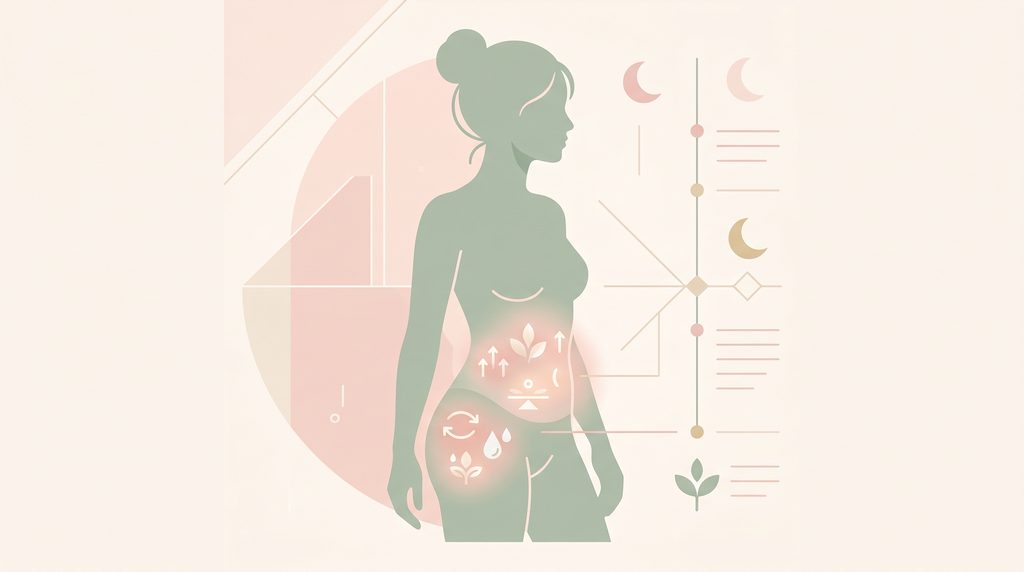
Most articles blame a “slowing metabolism”to explain the increases of belly fat and leave it there. That explanation isn’t wrong, but it’s incomplete. Three separate biological shifts are converging in your 40s, and each one pushes fat storage toward your abdomen specifically.
1. Estrogen Decline Changes Where You Store Fat
In your 20s and 30s, estrogen encourages your body to store fat in the hips and thighs — the classic “pear” pattern. As estrogen production declines during perimenopause, that storage pattern shifts. Fat cells in the abdominal area become more responsive to storage signals, while fat cells elsewhere become less active. The result: even without weight gain, your body composition redistributes toward the belly resulting in belly fat.
This is why many women say “I haven’t gained weight, but my shape has completely changed.” That’s not in your head — it’s estrogen-driven fat redistribution, and it’s well documented in metabolic research on perimenopausal women. A 2026 body-composition study following women through the menopausal transition found significantly higher visceral fat area and waist-to-hip ratio at each stage, even after controlling for BMI category (Szeliga et al., Journal of Clinical Medicine). Estrogen also plays a role in how your body handles fat cell size and number; postmenopausal women show measurable changes in fat cell structure in the abdominal area, including cell enlargement and increased inflammation, which is part of why the change can feel sudden even though it’s been building for years (Abildgaard et al., Scientific Reports).
2. Cortisol Becomes More Disruptive

Cortisol, your primary stress hormone, doesn’t necessarily rise in your 40s — but your sensitivity to it does. Combined with the sleep disruption that often accompanies hormonal changes at this age, cortisol has more opportunity to do what it does best: signal your body to store fat viscerally, meaning around your organs and abdomen(belly fat) rather than just under the skin,
Chronic, low-grade stress that you might have shrugged off in your 30s can now translate more directly into visible belly fat. Research on glucocorticoid receptor activity has found that abdominal fat tissue responds differently to cortisol than fat elsewhere in the body, part of the biological basis for why this specific area is so responsive to chronic stress (Ljung et al., International Journal of Obesity). We’ll cover this mechanism in depth in a dedicated article, but the short version is: managing stress and sleep isn’t a “nice to have” after 40 — it’s a metabolic necessity that helps to avoid belly fat.
3. Muscle Loss Quietly Lowers Your Calorie Burn

Starting around age 30, most people lose roughly 3–8% of their muscle mass per decade if they aren’t actively resistance training — and that rate accelerates after 40 (Ferrucci et al., Biomedicines). Muscle is metabolically active tissue; it burns calories even at rest. Less muscle means a lower resting metabolic rate, which means the same eating pattern that maintained your weight at 35 can lead to slow, steady fat gain at 45 — concentrated, again, around the midsection due to the hormonal factors above.
This is also why the scale can stay roughly the same while your clothes fit differently: you may be losing muscle and gaining fat simultaneously, a recomposition that a bathroom scale simply can’t detect.
Why Diet and Exercise Alone Often Don’t Fix It
This is the part that frustrates so many women: you’re eating “the same” and moving “the same,” yet the scale (and the mirror) tell a different story: the increases of belly fat That’s because the rules changed, not your effort. A calorie-counting approach designed for a 28-year-old’s hormonal profile doesn’t account for:
- Lower insulin sensitivity, meaning carbohydrates are processed differently
- Higher cortisol reactivity, meaning stress has a more direct metabolic cost
- Reduced muscle mass, meaning your baseline calorie burn is genuinely lower
- Sleep quality changes, which independently affect hunger hormones like ghrelin and leptin
None of this means belly fat after 40 is inevitable or unfixable. It means the strategy needs to match what’s actually happening in your body — not a one-size-fits-all approach built for a different life stage.
Why Visceral Fat Deserves Extra Attention
Not all body fat behaves the same way. Subcutaneous fat — the kind you can pinch — sits just under the skin and is largely cosmetic. Visceral fat, which tends to increase after 40 for the reasons above, wraps around internal organs like the liver and intestines and functions almost like an active endocrine organ: it releases inflammatory compounds and interferes with how your body responds to insulin.
This is why two women can carry the same total body weight but have very different health profiles depending on where that weight is distributed. Waist circumference — not just weight or BMI — is one of the more useful, low-tech indicators clinicians use to flag this specific type of fat gain, precisely because it’s disproportionately common after 40 and disproportionately relevant to long-term metabolic health.
The takeaway isn’t to panic about a changing waistline. It’s that the why behind this specific pattern of fat gain matters enough to actually understand, rather than treating it as a purely cosmetic frustration to fix with the same tactics that worked at 30.
Warning Signs Your Belly Fat Is Hormonally Driven
Not all abdominal weight gain has the same root cause, but a few patterns tend to point specifically toward the hormonal shifts described above:
- Weight changes concentrated around the midsection while arms and legs stay relatively stable
- Waking up tired even after a full night’s sleep
- Increased cravings, particularly for sugar and refined carbs, in the afternoon or evening
- New or worsening sleep disruption, including waking around 3–4 a.m.
- A sense that stress “hits differently” than it used to — faster, harder to shake off
If several of these sound familiar, the mechanisms above are very likely playing a role.
What Actually Helps (The Short Version)
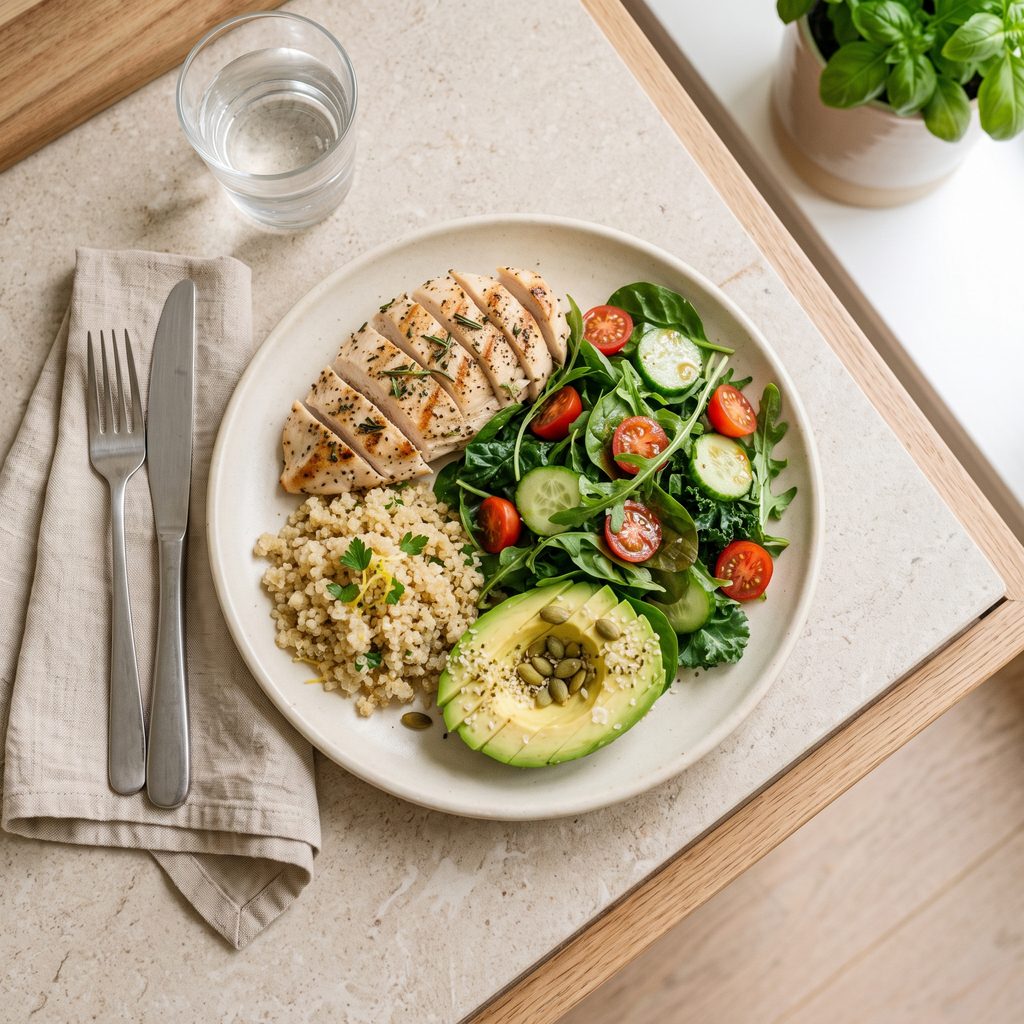
A full protocol deserves its own space, but the evidence-backed levers are:
- Prioritize protein and resistance training to preserve and rebuild muscle mass, protecting your resting metabolic rate.
- Treat sleep as non-negotiable. Even one week of poor sleep measurably increases cortisol reactivity and abdominal fat storage in research settings.
- Manage stress actively, not just “try to relax” — structured practices (breathwork, walking, boundary-setting) measurably lower cortisol over weeks.
- Support insulin sensitivity through fiber, protein-forward meals, and minimizing blood sugar spikes.
If you want a simple, structured starting point, we put together a free 7-Day Belly Fat Reset — a short, practical plan that targets exactly these four levers without requiring a diet overhaul. [Get the free PDF here →]
For a deeper look at the specific supplements and strategies women are using to support this process, see our full breakdown: 7 Best Fat Burners for Women Over 40 →
Frequently Asked Questions
Is belly fat after 40 really different from belly fat at 25? Biologically, yes. It’s not just “more fat” — it’s fat that’s being actively redirected toward the abdomen by estrogen decline, and it tends to be more metabolically active (visceral) rather than sitting just under the skin.
Can belly fat be reversed, or is it permanent? It’s very responsive to the right approach — resistance training, sleep, and stress management specifically, rather than just eating less. The timeline is typically weeks to a few months of consistent effort, not days.
Do I need to eat less than I did in my 30s? Not necessarily less — often just differently. Prioritizing protein and fiber, and paying attention to insulin sensitivity, tends to matter more than simply cutting total calories further.
References
Szeliga A, Chedraui P, Meczekalski B. The Impact of the Menopausal Transition on Body Composition and Abdominal Fat Redistribution. Journal of Clinical Medicine, 2026. ncbi.nlm.nih.gov/pmc/articles/PMC12842199
Abildgaard J, et al. Changes in abdominal subcutaneous adipose tissue phenotype following menopause is associated with increased visceral fat mass. Scientific Reports, 2021. ncbi.nlm.nih.gov/pmc/articles/PMC8292317
Ljung T, et al. Central and peripheral glucocorticoid receptor function in abdominal obesity. International Journal of Obesity. link.springer.com/article/10.1007/BF03343995
Ferrucci L, et al. Muscular changes associated with aging. Biomedicines, 2023. pmc.ncbi.nlm.nih.gov/articles/PMC9952920
The Bottom Line
Belly fat after 40 isn’t a discipline problem — it’s a hormonal, metabolic, and muscular shift that changes what your body needs. Estrogen decline redistributes fat toward the abdomen, increased cortisol sensitivity amplifies stress-related storage, and quiet muscle loss lowers your calorie burn. Once you understand the why, the what to do about it becomes a lot more actionable — and a lot less about blame.












1 comment