
Magnesium for Women Over 40: Benefits, Best Types & A Complete Guide
Table of Contents
Why Magnesium Matters After 40
Why Magnesium for women over 40? Magnesium may not get as much attention as vitamin D, collagen, or omega-3s, but it plays a role in hundreds of processes throughout the body. For women over 40, this essential mineral is particularly worth paying attention to as part of an overall approach to nutrition, physical activity, sleep, and healthy aging.
But does being over 40 automatically mean you need a magnesium supplement? Not necessarily.
Before adding another bottle to your wellness routine, it helps to understand what it actually does, how much you need, where to get it from food, and why there are so many different forms of magnesium supplements.
Affiliate Disclosure: This article may contain affiliate links. If you make a purchase through one of these links, we may earn a small commission at no additional cost to you. We only recommend products we believe may be useful to our readers.
What Is Magnesium?
Magnesium is an essential mineral naturally present in many foods. Your body needs it for numerous biochemical reactions.
Among other functions, it contributes to:
Normal muscle and nerve function
Energy production
Protein synthesis
Normal heart rhythm
Bone health
Blood glucose regulation
Your body stores a significant proportion of its magnesium in the bones, while the remainder is distributed throughout muscles, soft tissues, blood, and other body fluids. Because it is involved in so many physiological processes, consistently getting too little isn’t something to ignore.
Why Pay Attention in Women Over 40?
Turning 40 doesn’t suddenly change your magnesium requirements overnight. However, midlife is a useful time to take a closer look at nutritional habits.
Women may be thinking more about maintaining muscle, supporting bone health, staying physically active, improving diet quality, and preparing for the changes that occur during perimenopause and menopause.
Magnesium intersects with several of those areas. That doesn’t make it a miracle mineral. It simply makes it one piece of a much larger healthy-aging picture.
Magnesium and Bone Health
Calcium tends to receive most of the attention when people talk about bones, but magnesium is involved too. A substantial amount of the magnesium stored in the body is found in bone.
It participates in bone formation and also interacts with nutrients involved in skeletal health, including vitamin D.
For women approaching menopause, bone health becomes increasingly important because declining estrogen levels during and after menopause can contribute to accelerated bone loss. Magnesium alone won’t prevent osteoporosis, but meeting your nutritional needs is part of maintaining overall bone health.
Related reading: Vitamin D After 40: Why Your Needs May Change
Magnesium and Muscle Function
Magnesium helps regulate normal muscle contraction and relaxation. That’s particularly relevant if you’re trying to remain active as you get older.
Walking, resistance training, yoga, swimming, and other forms of movement all depend on healthy muscle and nerve function.
Rather than viewing magnesium as a shortcut for improving exercise performance, think of it as one of the essential nutrients your body requires to function normally.
Related reading: Strength Training After 40: A Beginner’s Guide for Women
Magnesium and Energy Metabolism
Feeling tired doesn’t automatically mean you’re deficient in magnesium. Fatigue has many possible causes, ranging from insufficient sleep and stress to diet, medications, and underlying health conditions.
Nevertheless, magnesium participates in energy production at the cellular level. Severe magnesium deficiency can therefore produce symptoms that include weakness and fatigue.
If persistent tiredness is affecting your everyday life, it’s better to investigate the cause rather than assuming a supplement will fix it.
Related reading: Why Am I So Tired After 40? Everyday Factors Worth Looking At
Can Magnesium Help With Sleep?
This is one of the biggest reasons magnesium supplements have become popular online. The evidence deserves some perspective.
Magnesium is involved in nervous-system function, and researchers have investigated whether supplementation could influence sleep. Some studies suggest potential benefits in certain populations, but the overall evidence is still limited and inconsistent.
That means magnesium shouldn’t be presented as a sleeping pill. If your diet is low in magnesium, correcting inadequate intake makes nutritional sense. But taking large doses simply because you saw a social-media post promising perfect sleep is another matter.
A relaxing evening routine, consistent sleep schedule, appropriate light exposure, and other sleep habits remain important.
The “Sleepy Girl Mocktail” Trend: A Pinterest Favorite
A viral trend on TikTok and Pinterest, the “Sleepy Girl Mocktail” combines tart cherry juice, magnesium powder, and a fizzy mixer like sparkling water or prebiotic soda. Proponents say it’s “a match made in heaven for good sleep” .
The science behind it? Tart cherry juice contains naturally occurring melatonin and tryptophan, which can help regulate sleep, while magnesium promotes muscle relaxation . According to the Cleveland Clinic, “There’s sound science to back up the idea that a drink like this could help you relax and possibly fall asleep faster” .
However, it’s not a cure for insomnia. As one expert notes, “it’s not a magic bullet” .
Try the Sleepy Girl Mocktail: Get Magnesium Glycinate Powder on iHerb (rel=”sponsored”)
Related reading: How to Create an Evening Routine That Helps You Wind Down
How Much Magnesium Do Women Need?
Magnesium requirements depend somewhat on age and life stage. According to the U.S. National Institutes of Health (NIH), the recommended dietary allowance (RDA) for women is generally:
19–30 years: 310 mg per day
31 years and older: 320 mg per day
Pregnancy: Requirements are higher and vary by age
Importantly, these recommendations refer to total magnesium intake, including food. They don’t mean every woman over 40 should take a 320 mg magnesium supplement.
Source: NIH Office of Dietary Supplements – Magnesium
Magnesium-Rich Foods
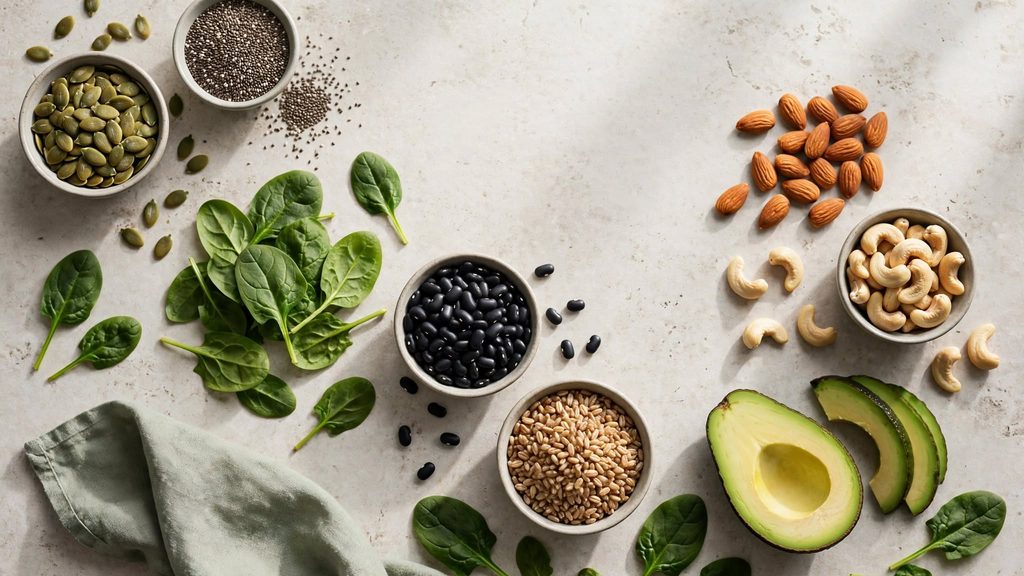
Food is a great place to start.
Magnesium naturally occurs in a wide variety of nutritious foods, including:
- pumpkin seeds;
- chia seeds;
- almonds;
- cashews;
- spinach;
- black beans;
- whole grains;
- soy foods;
- some fortified cereals.
Dark leafy greens are particularly interesting because magnesium is part of chlorophyll, the pigment that gives plants their green color.
Building meals around vegetables, legumes, nuts, seeds and whole grains can therefore contribute meaningful amounts of magnesium while providing many other nutrients.
Do Women Over 40 Need Magnesium Supplements?
Not everyone does.
A supplement may be worth discussing with a healthcare professional when dietary intake is inadequate or when individual circumstances increase the likelihood of low magnesium status.
Certain gastrointestinal conditions, some medications and other health circumstances can affect magnesium absorption or loss.
This is one reason it’s better to avoid blanket statements such as “every woman over 40 needs magnesium.”
Individual needs matter.
Magnesium Glycinate vs Citrate vs Oxide: What’s the Difference?
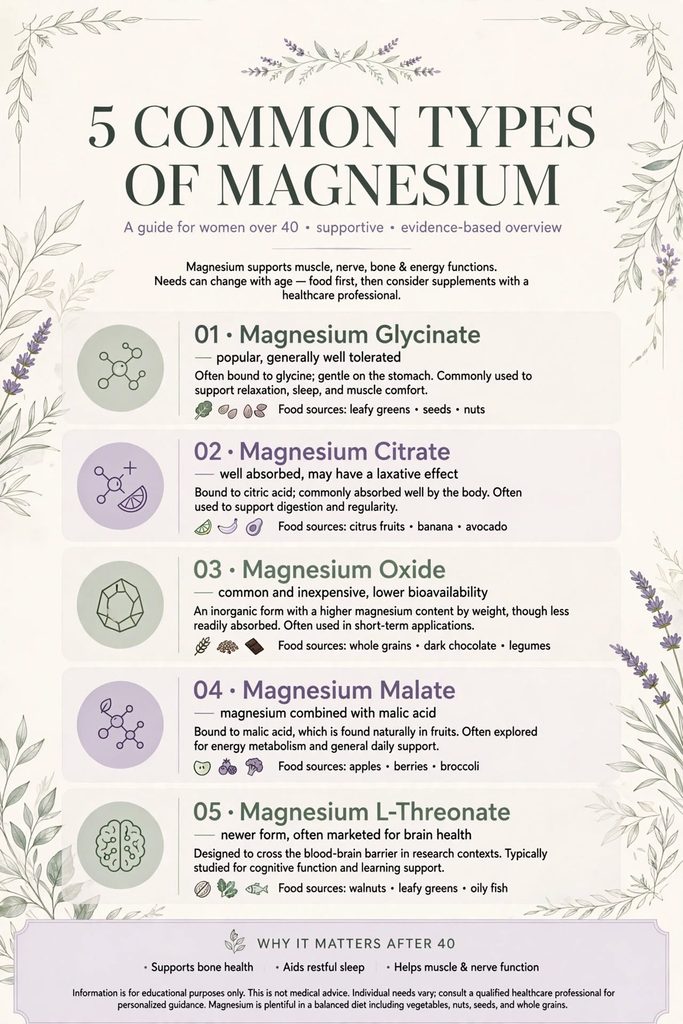
One of the confusing things about shopping for magnesium is discovering just how many varieties exist.
Here are several you’re likely to encounter.
Magnesium Glycinate
Magnesium glycinate — sometimes labeled magnesium bisglycinate — combines magnesium with the amino acid glycine.
It has become particularly popular in supplements marketed for evening and relaxation routines.
It’s also often chosen by people looking for a form that may be easier on the digestive system.
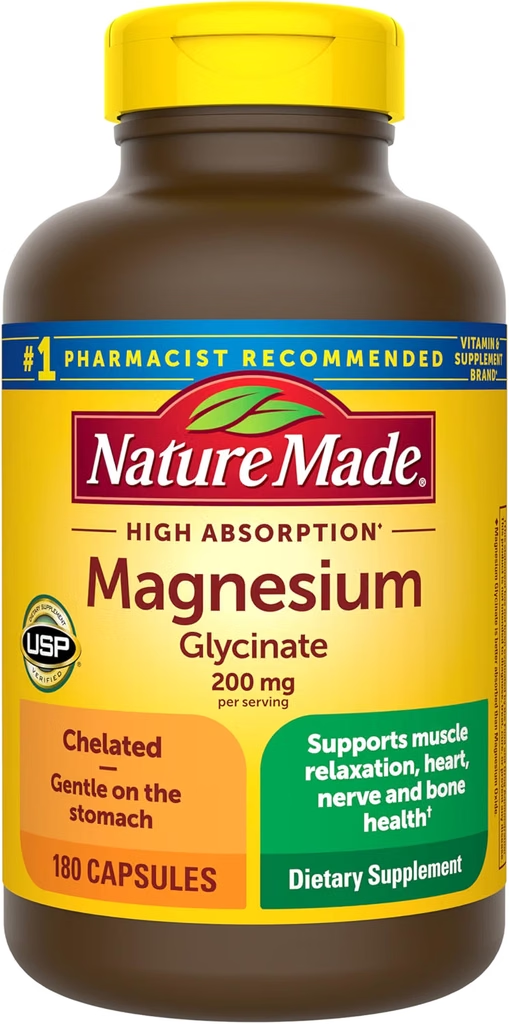
Nature Made Magnesium Glycinate 200 mg per Serving, 180 Capsules
Magnesium Citrate
Magnesium citrate combines magnesium with citric acid.
It is relatively well absorbed and is widely available.
It can also have a laxative effect, particularly at higher doses, so this characteristic should be considered when choosing a product.
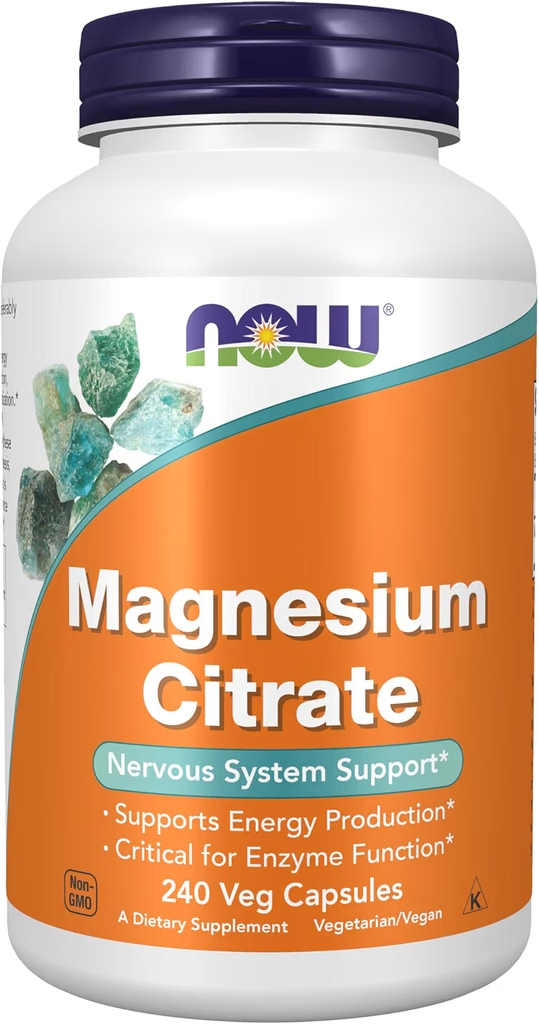
NOW Supplements, Magnesium Citrate, Enzyme Function*, 240 Veg Caps
Magnesium Oxide
Magnesium oxide contains a relatively high proportion of elemental magnesium, but it tends to be less bioavailable than several other forms.
It’s inexpensive and common in supplements.
It can also have a laxative effect.
Magnesium Malate
Magnesium malate combines magnesium with malic acid.
You’ll sometimes see it promoted for energy or muscle-related benefits. Those marketing claims shouldn’t be confused with strong clinical evidence that magnesium malate produces unique benefits compared with other appropriate magnesium forms.
Magnesium L-Threonate
Magnesium L-threonate is frequently marketed for brain health because it has been investigated for its ability to increase magnesium concentrations in the central nervous system.
It is usually considerably more expensive than common magnesium forms.
Research into its potential neurological applications is interesting, but marketing claims often go beyond what has been firmly demonstrated in humans.
So Which Type of Magnesium for women over 40 Is Best?
There isn’t one form of magnesium for women over 40 that’s automatically best .
Instead, consider:
Purpose: Why are you considering supplementation with magnesium for women over 40 in the first place?
Tolerance: Some forms are more likely to cause gastrointestinal effects.
Dose: Look at the amount of elemental magnesium rather than judging a supplement purely by the large number printed on the front.
Other ingredients: Gummies, powders and flavored products can contain sweeteners and other additives.
Quality: Choose products from reputable manufacturers with clear labeling and appropriate quality controls.
Price: The most expensive magnesium isn’t automatically the best.
This is where comparing products becomes more useful than simply declaring one supplement the winner.
What Should You Look for When Buying Magnesium?
When we add our product recommendations to this guide, we’ll evaluate products using a few practical criteria:
- clearly stated form of magnesium;
- amount of elemental magnesium per serving;
- reasonable serving size;
- transparent ingredient list;
- unnecessary additives;
- third-party testing or quality information when available;
- price per serving.
My top pick!
Nature Made Magnesium Complex Supplement with Vitamin D & Zinc, 60 Capsules
Magnesium Glycinate, Malate, Citrate & Oxide for Muscle, Nerve, Heart & Bone Support, 30 Day Supply

Nutrients That Work With Magnesium: The Synergy Effect
Magnesium doesn’t work in isolation. Research shows that combining it with certain other nutrients may enhance its benefits, particularly for women over 40.
Vitamin D3 + K2
A 2025 study published in Cureus found that a 12-week combined supplementation of vitamin D3, vitamin K2, vitamin B6, vitamin B12, and magnesium significantly improved immune function, reduced body fat, and improved metabolic parameters in middle-aged women .
Key findings from the study of 52 women (mean age: 49.2 years):
Serum IgG increased from 9.8 to 11.3 g/L
Body weight decreased by an average of 1.4 kg
Body fat percentage decreased by 1.2%
Waist circumference decreased by 1.5 cm
Fasting glucose improved from 93.5 to 89.8 mg/dL
Homocysteine (a marker of cardiovascular risk) dropped from 11.2 to 8.5 μmol/L
The combination of Vitamin D3, K2, and Magnesium is hypothesized to create a more resilient bone matrix, making it less prone to fractures .
My best choice:
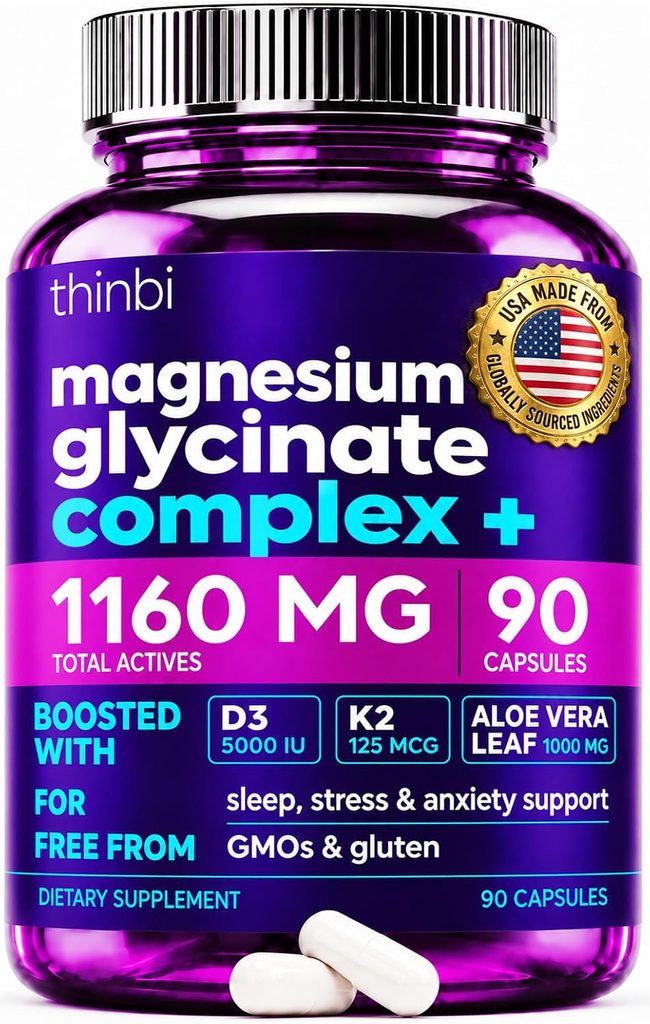
Magnesium Glycinate 1160mg + Aloe Vera, D3 & K2 Complex
Ashwagandha
Ashwagandha, an adaptogenic herb, has been shown to reduce stress and cortisol levels, which supports sleep quality over time . When combined with magnesium, the synergistic effect on relaxation and sleep can be profound .
Magnesium supports muscle relaxation, while ashwagandha is traditionally used to calm the nerves and help the body adapt to stress .
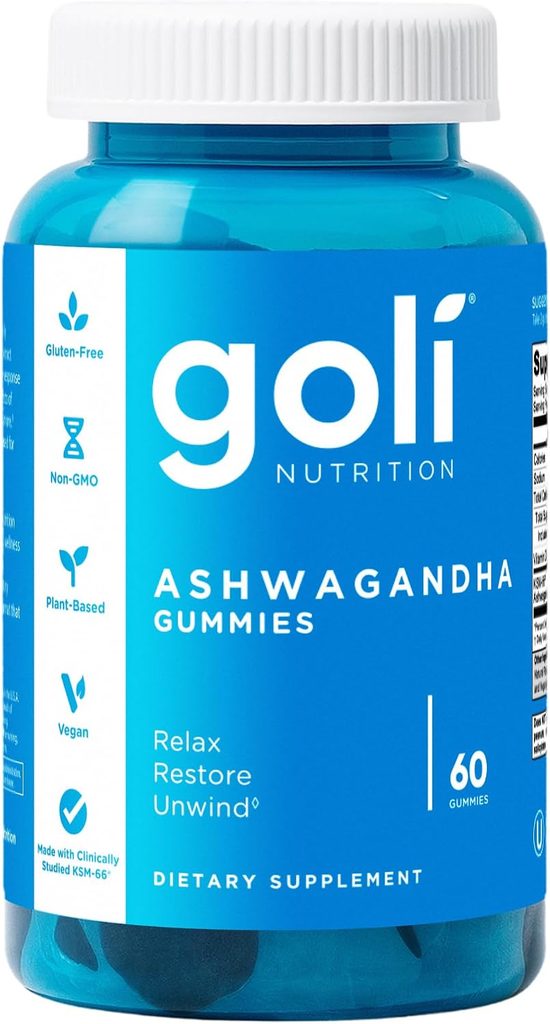
Goli Ashwagandha & Vitamin D Gummy – 60 Count – Mixed Berry, KSM-66, Vegan, Plant Based, Non-GMO, Gluten-Free & Gelatin Free Relax.
best-seller! View on Amazon
B Complex Vitamins
B vitamins, particularly B6, B9 (folate), and B12, work synergistically with magnesium. A targeted combination of Vitamin D, Magnesium, and B-complex vitamins typically provides the most significant relief for common symptoms like hot flashes and mood swings .
Vitamin B6 contributes to the regulation of hormonal activity, an important factor as estrogen levels begin to decline . B vitamins, magnesium, and omega-3s are key players in supporting neurological function and emotional well-being .
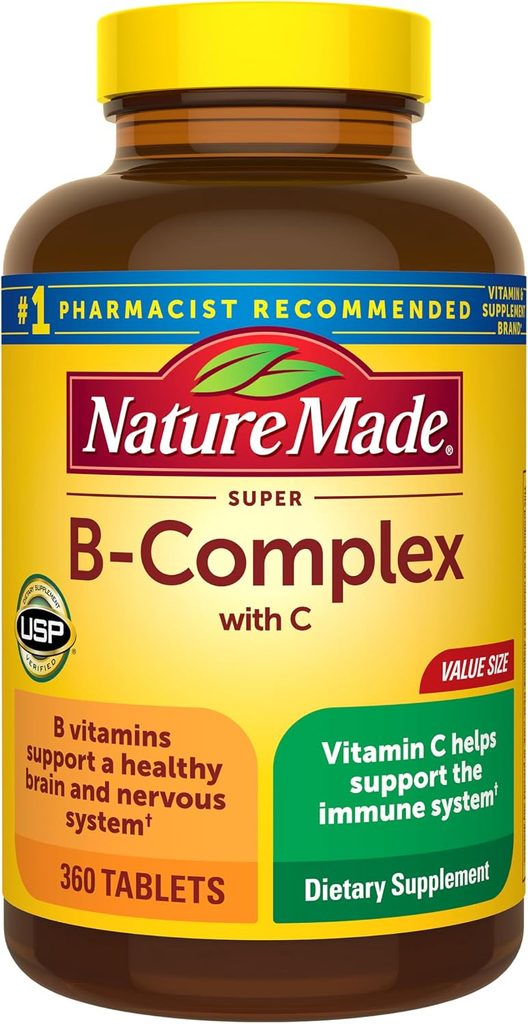
Nature Made Super B Complex with Vitamin C & Folic Acid, 360 Tablets
Can You Take Too Much Magnesium?
Yes.
Magnesium obtained naturally from food generally isn’t a concern for healthy people because the kidneys help regulate excess amounts.
Supplemental magnesium is different.
High supplemental doses can cause diarrhea, nausea and abdominal cramping. Extremely high intakes can be dangerous.
The NIH establishes a tolerable upper intake level of 350 mg per day of magnesium from supplements and medications for adults. This limit doesn’t include magnesium naturally present in food.
Some people also need additional caution because magnesium can interact with certain medications.
If you take prescription medications, have kidney disease, are pregnant, or have another medical condition, discuss magnesium supplementation with an appropriate healthcare professional.
A Simple Food-First Magnesium Routine
You don’t have to make nutrition complicated.
A day containing oatmeal or whole grains, leafy vegetables, beans, nuts and seeds can already contribute meaningful amounts of magnesium for women over 40.
A simple approach might look like this:
Breakfast: oatmeal with chia seeds and almonds.
Lunch: whole-grain bowl with spinach, beans and vegetables.
Snack: a small portion of nuts or seeds.
Dinner: vegetables paired with a protein source and whole grains or legumes.
The benefit is that you’re not just obtaining magnesium. You’re also getting fiber, protein, healthy fats, vitamins, minerals and plant compounds.
Magnesium for women over 40: The Bottom Line
Magnesium for women over 40 is an essential nutrient, not a miracle supplement.
Magnesium For women over 40, deserves attention because of its roles in normal muscle and nerve function, energy metabolism, glucose regulation and bone health.
But being over 40 doesn’t automatically mean you need supplementation.
Start by looking at your diet. If you’re considering a supplement, pay attention to the form, elemental magnesium dose, product quality, medications and your individual health circumstances.
And remember that supplements work best in their proper role: supplementing a healthy lifestyle rather than replacing one.
Frequently Asked Questions
What is the best magnesium for women over 40?
There isn’t one universally best form. Magnesium glycinate and citrate are commonly used and relatively well absorbed, but the appropriate choice depends on individual needs, tolerance, dose and health circumstances.
Should every woman over 40 take magnesium?
No. Magnesium is essential, but many people can obtain meaningful amounts through food. Supplementation should depend on diet and individual circumstances rather than age alone.
Is magnesium glycinate better than magnesium citrate?
Neither is universally better. Glycinate is popular among people seeking a well-tolerated supplement, while citrate is also well absorbed but may have a greater laxative effect.
Can I take magnesium every day?
Magnesium is consumed every day through food. Daily supplementation may be appropriate for some people, but dose, health conditions and medications need to be considered.
Can magnesium replace a healthy diet?
No. Supplements are intended to complement dietary intake, not replace a varied, nutritious diet.
This article is for educational purposes and is not a substitute for individualized medical advice.













1 comment