Hair Anatomy & Haircare Guide: How to Care for Your Hair From Root to Tip
Disclosure: This article may contain affiliate links. If you make a purchase through one of these links, we may earn a commission at no additional cost to you. As an Amazon Associate, we earn from qualifying purchases.
Table of Contents
Healthy-looking hair is not simply about finding the latest shampoo, serum or viral treatment.
The way your hair looks and feels is influenced by its structure, your scalp environment, your natural hair pattern, the products you use and the way you handle your hair every day.
Understanding a little about hair anatomy can make choosing a routine much easier. Instead of buying products based only on trends, you can begin asking better questions: Does my scalp need more cleansing? Does my hair need more conditioning? Am I using too much heat? Is my hair breaking, or am I actually experiencing shedding?
This guide explains how hair is built, how the main hair types differ, what a simple wash-day routine can look like and which products actually serve a useful purpose.
1. Hair Anatomy: What Is Your Hair Actually Made Of?
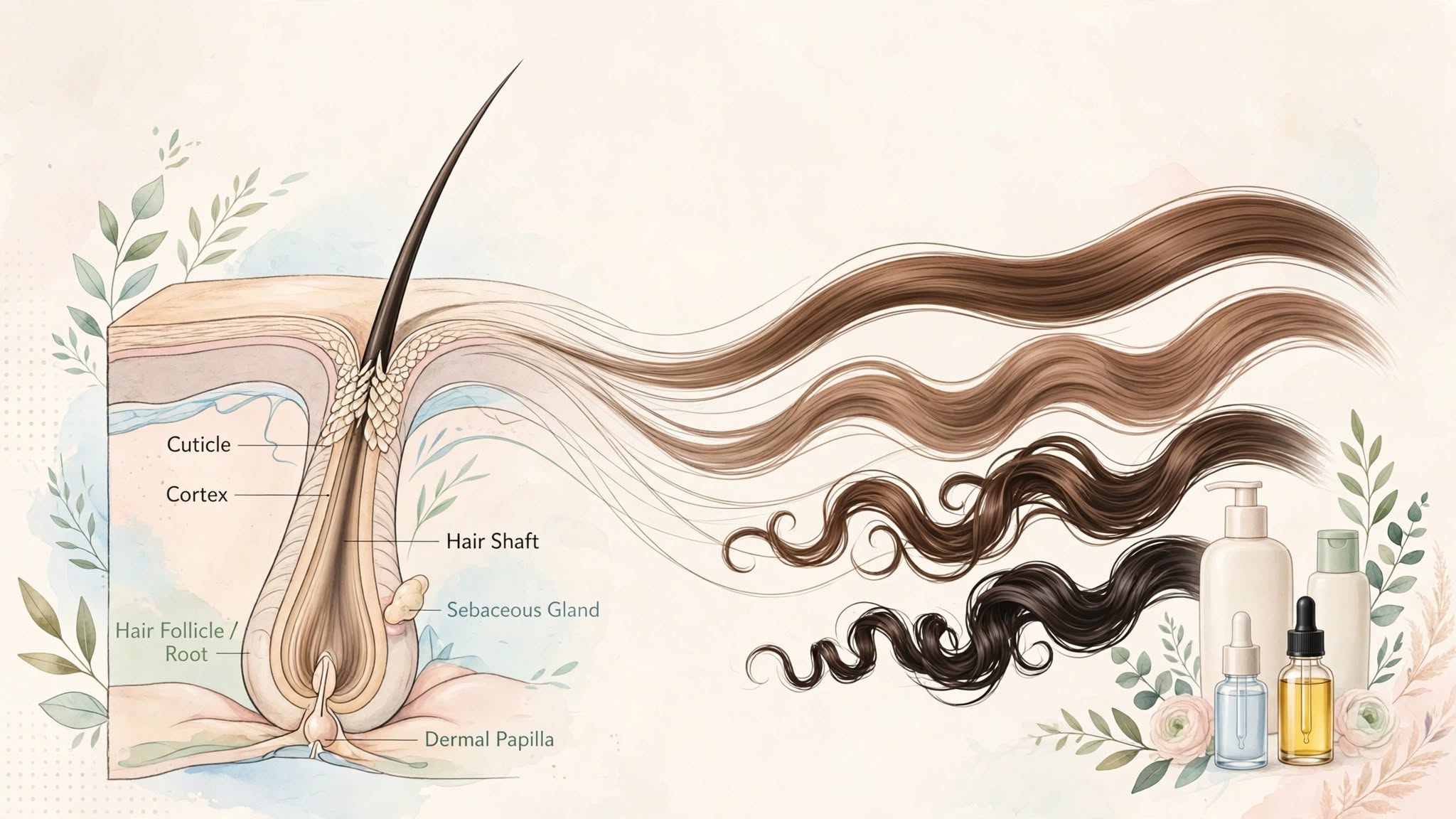
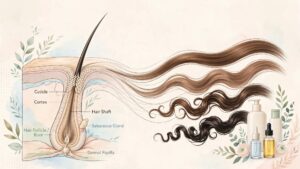
The strand of hair you see above your scalp is called the hair shaft. Beneath the surface, each strand originates from a hair follicle, a living structure within the skin.
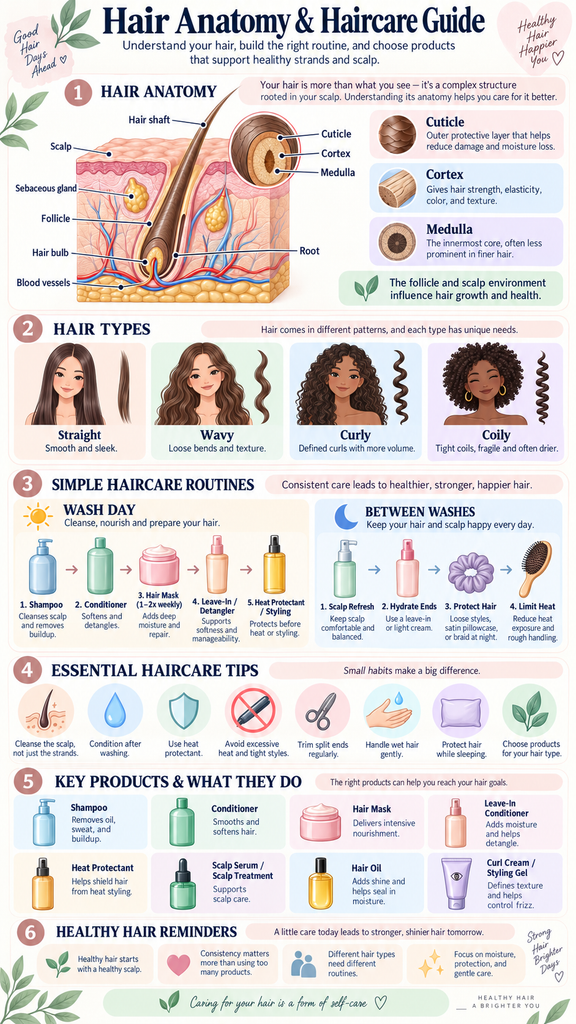
The visible hair shaft itself is made primarily of keratinized cells and contains three main structural regions: the cuticle, cortex and, in some hairs, medulla. The follicle beneath the skin includes structures involved in producing and supporting the growing hair.
Understanding these basic structures helps explain why conditioning, gentle handling and heat protection can change how your hair behaves — even though the visible portion of the hair is no longer living tissue.
The Cuticle: Your Hair’s Protective Outer Layer
The cuticle is the outermost layer of the hair shaft.
Think of it as a series of microscopic overlapping scales surrounding the internal structure of your hair. Its condition affects how smooth, shiny, tangled or rough a strand appears.
When the cuticle remains relatively intact and smooth, the hair generally feels softer and reflects light more evenly. Repeated chemical processing, friction and excessive heat can damage this outer surface over time.
That is one reason gentle detangling and conditioning matter so much, particularly for longer hair: the ends have been exposed to washing, styling and environmental wear for much longer than the new hair near your scalp.
The Cortex: Strength, Color and Elasticity
Beneath the cuticle lies the cortex, which makes up most of the hair fiber.
It contains keratin structures and pigment and plays a major role in the hair’s strength, mechanical properties, color and texture.
Chemical treatments that permanently alter the shape or color of hair act significantly on this part of the fiber, which helps explain why repeatedly bleached, relaxed or chemically processed hair often needs particularly careful handling.
The Medulla: The Inner Core
The medulla is the central portion of some hair shafts. It is more commonly found in thicker hairs and may be absent from finer strands.
For everyday haircare, however, you do not need to “treat” the medulla separately. Most cosmetic haircare focuses on protecting and conditioning the outer fiber.
2. The Scalp and Hair Follicle Matter Too
Haircare should not begin only where the visible strand begins.
Inside the scalp, the hair follicle surrounds the developing hair. At its base is the hair bulb, while nearby structures include sebaceous glands and blood vessels.
Hair follicles also move through repeating phases of growth, transition, rest and shedding.
This distinction is important:
Your scalp and follicles are living tissue. Your visible hair shaft is not.
That means shampoo primarily serves a scalp-cleansing function, while conditioners, masks, oils and leave-ins mainly improve the condition and manageability of the hair fiber.
A balanced haircare routine therefore needs to consider both scalp health and strand care.
You can read more here:NCBI — Histology, Hair and Follicle
3. Know Your Hair Type Before Building Your Routine
There is no single perfect routine for everyone.
The American Academy of Dermatology recommends considering your hair type when choosing products and deciding how frequently you need to wash your hair as a first step of haircare.
A simple way of looking at natural hair patterns is to divide them into four broad groups.
Straight Hair
Straight hair has little or no visible curl pattern.
Natural scalp oils can often move down straighter strands more easily, which means some people with straight or fine hair notice oiliness more quickly.
You may prefer for haircare:
- Lightweight shampoos
- Lightweight conditioners
- Minimal heavy oils near the roots
- Heat protection when blow-drying or straightening
Wavy Hair
Wavy hair forms loose bends or an “S” pattern.
It can sometimes become oily at the roots while feeling dry or frizzy through the lengths, making product balance especially important for haircare.
You may benefit from:
- Gentle shampoo
- Lightweight-to-medium conditioner
- Leave-in conditioner on the lengths
- Light styling cream or mousse
- Occasional deeper conditioning
Curly Hair
Curly hair forms more defined curls and spirals.
Curly hair often needs more attentionin haircare to conditioning and gentle detangling because it can be more susceptible to dryness and breakage. Dermatologists at the AAD specifically recommend keeping curly hair moisturized and detangling it while wet rather than aggressively brushing it dry.
You may benefit from:
- Moisturizing shampoo
- Rich conditioner
- Leave-in conditioner
- Curl cream or styling gel
- Wide-tooth comb or curl-friendly detangling brush
Coily Hair
Coily hair forms tight curls, coils or zigzag patterns.
It may be especially vulnerable to dryness, tangling and mechanical breakage, so gentle handling and moisture retention are priorities.
Often useful for haircare:
- Moisturizing cleansers
- Rich conditioners
- Deep conditioning treatments
- Leave-in conditioner
- Creams or oils for added lubrication
- Low-friction nighttime protection
Importantly, curl pattern is only one part of your hair profile.
Two people with curly hair can still need completely different routines because their strand thickness, density, scalp oiliness, chemical history and degree of damage differ.
4. A Simple Wash-Day Haircare Routine
Haircare does not need twelve steps.
For many people, the most effective routine is simply one they can follow consistently.
Here is a practical foundation.
Step 1: Shampoo the Scalp
The main job of shampoo is to remove accumulated sebum, sweat, dirt and styling-product buildup.
Instead of aggressively rubbing shampoo through the entire length of your hair, concentrate primarily on your scalp.
When you rinse, the shampoo naturally travels through the lengths.
How often should you shampoo?all hair
There is no universal schedule.
A person with straight, fine hair and an oily scalp may wash much more frequently than someone with thick, dry or tightly coiled hair. The AAD recommends basing washing frequency on how oily or dirty the scalp and hair become.
Our Suggested Shampoo for daily use for all hair type, for men and women. Detoxifies, removing impurities and buildup.
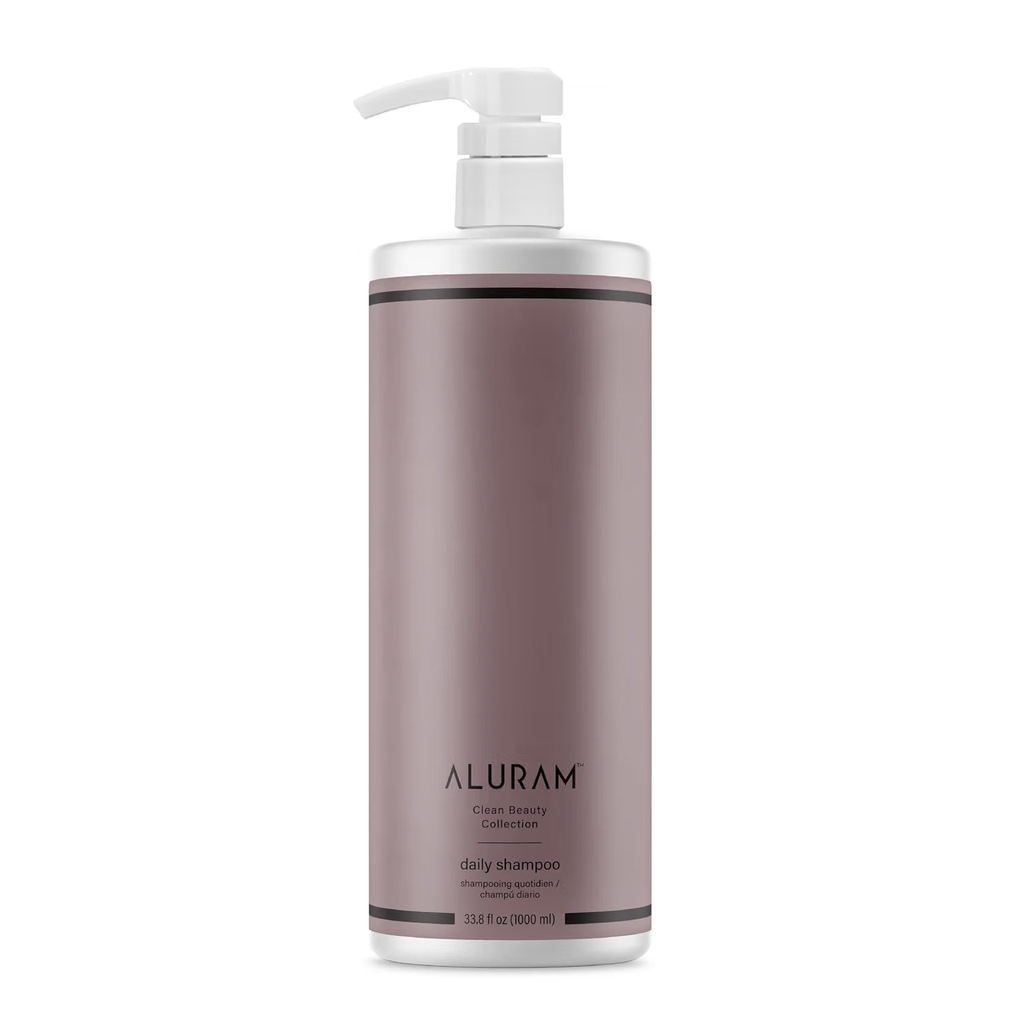
ALURAM Coconut Water Daily Shampoo for Men and Women, Detoxifying Hydration and Volume for All Hair Types
Step 2: Condition the Hair
Conditioner helps improve softness, lubrication and manageability while reducing friction between strands.
Concentrate conditioner primarily through the mid-lengths and ends unless the product is specifically designed for scalp use in haircare;
This step becomes increasingly important for long, curly, coily, color-treated or frequently styled hair.
For Daily Conditioning in Haircare
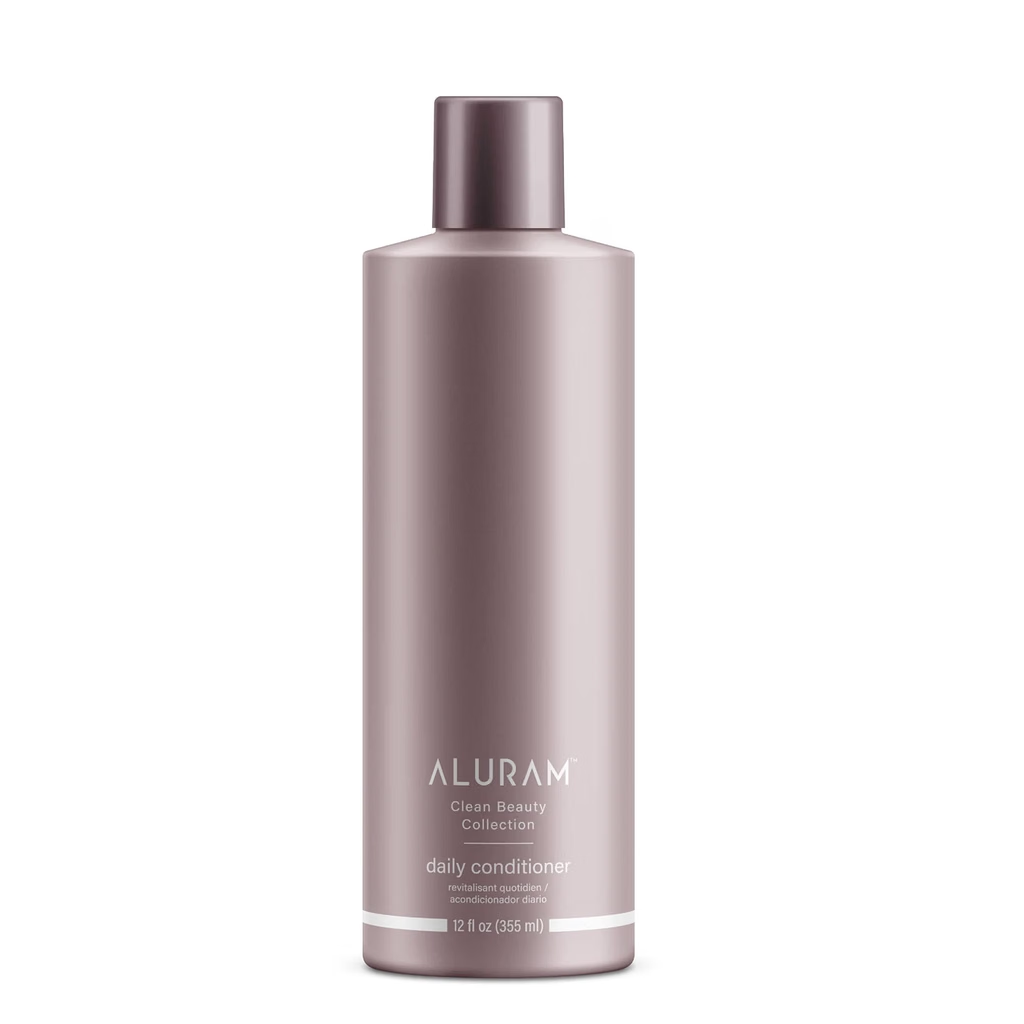
ALURAM Coconut Water Daily Conditioner for Men and Women, Clean Hydration and Shine for All Hair Types, 12 Fl Oz
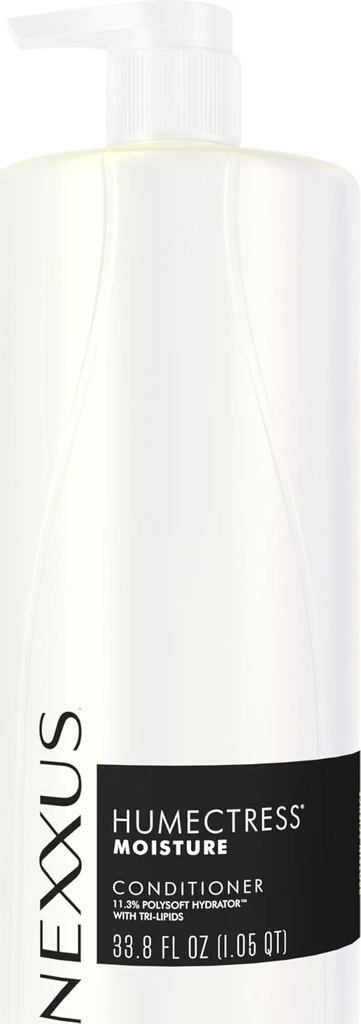
My recommendation for hair that needs extra softness and conditioning, especially through dry or stressed lengths:
Step 3: Add a Hair Mask When Your Hair Needs More Conditioning
A hair mask is essentially a more intensive conditioning step in haircare.
You do not necessarily need one every time you wash.
It can be especially useful when the hair feels dry, rough, difficult to detangle or has undergone frequent heat or chemical processing.
Rather than automatically following a fixed “twice-weekly” rule, adjust frequency to how your hair responds.
Too many products are not always better.
Step 4: Apply Leave-In Conditioner or Detangler
Leave-in products can make wet hair easier to detangle and add conditioning without requiring another rinse.
In haircare, They can be especially helpful for:
- Curly or coily hair
- Long hair
- Dry ends
- Hair that tangles easily
- Chemically treated hair
Start with a small amount. Fine hair may be weighed down by the same quantity that works beautifully for thicker, curlier hair.
Step 5: Protect Hair Before Heat Styling
Hair dryers, flat irons and curling tools expose hair to significant heat.
Laboratory research has shown that higher temperatures can produce progressively greater damage to the hair’s surface and cuticle.
A heat protectant cannot make excessive heat harmless, but it can form part of a damage-reduction strategy alongside lower temperatures, less frequent styling and gentler handling.
Heat Styling? Consider Adding a Protectant for haircare
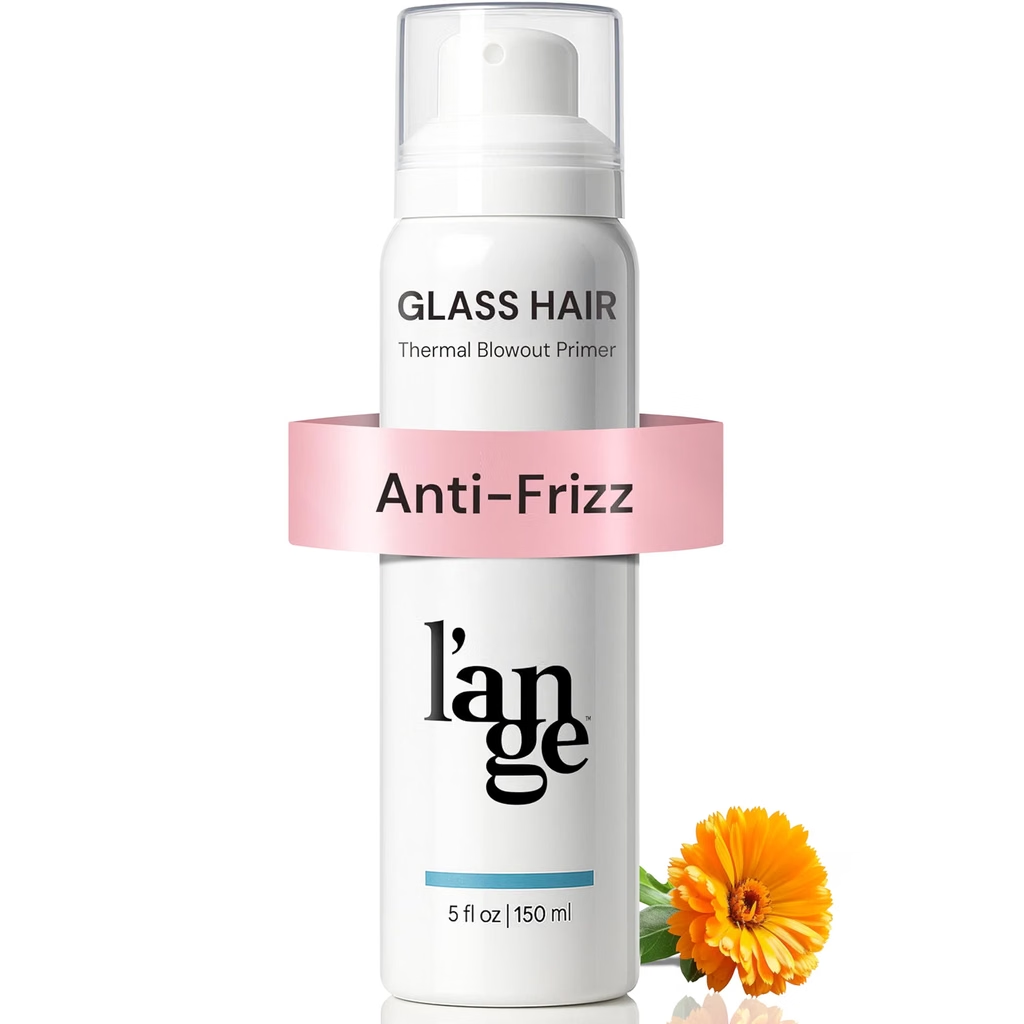
L’ANGE HAIR Glass Hair Heat Protectant Spray | Anti-Frizz Blow Dry Mist | Long Lasting Hold & Shine | Humidity Protection | Thermal Heat Protection Spray | Lightweight Blow Out Primer, 5 fl oz Bottle
Apply according to the manufacturer’s instructions before using heated styling tools.
5. What to Do Between Washes
Healthy haircare is not limited to wash day.
Small habits between washes can reduce unnecessary manipulation and help preserve your style.
Keep Your Scalp Comfortable
If you frequently use dry shampoo, oils, gels, creams or styling products, remember that residue can accumulate.
Scalp care does not necessarily require a complicated collection of tonics and serums. Sometimes the most useful intervention is simply cleansing adequately when needed.
Hydrate and Condition Dry Ends
If your ends feel rough between washes, a small amount of leave-in conditioner or another lightweight conditioning product may help.
The goal is not to continually layer product until the hair feels coated.
Use only what your hair needs.
Choose Loose Protective Styles
Loose braids or other low-tension styles can help protect long or textured hair from tangling during sleep.
Avoid hairstyles that repeatedly pull tightly on the scalp.
Reduce Friction at Night
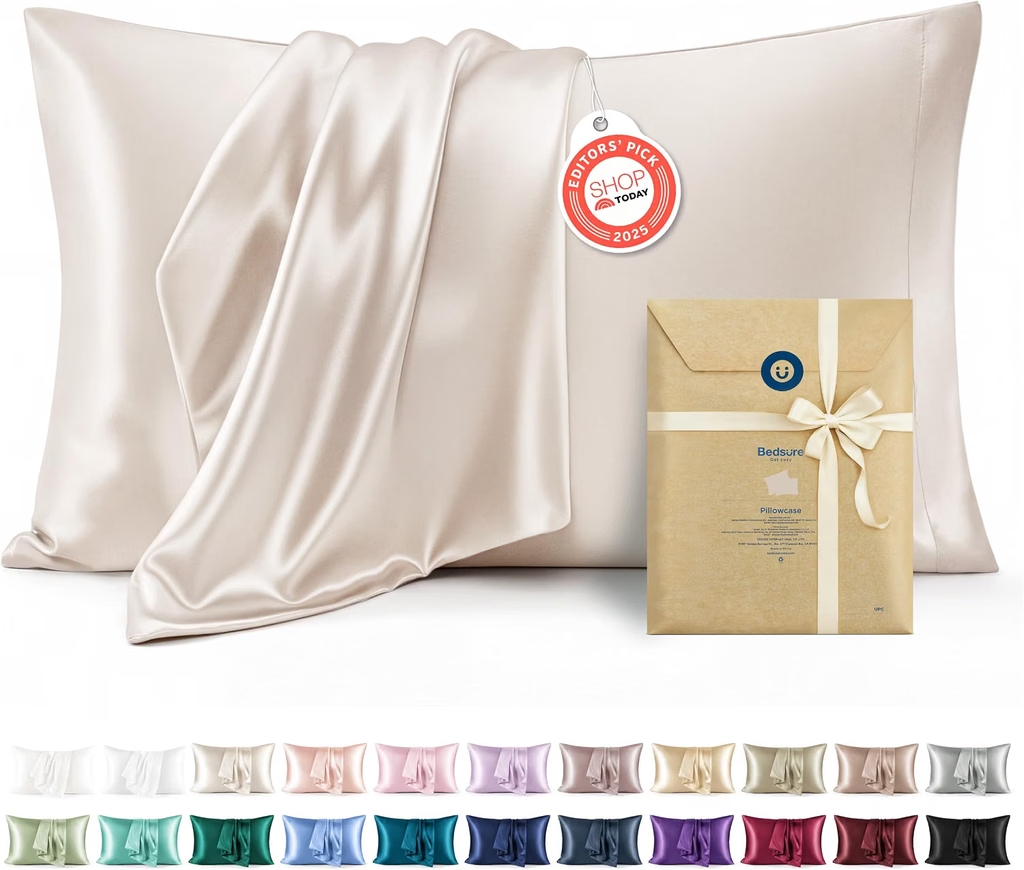
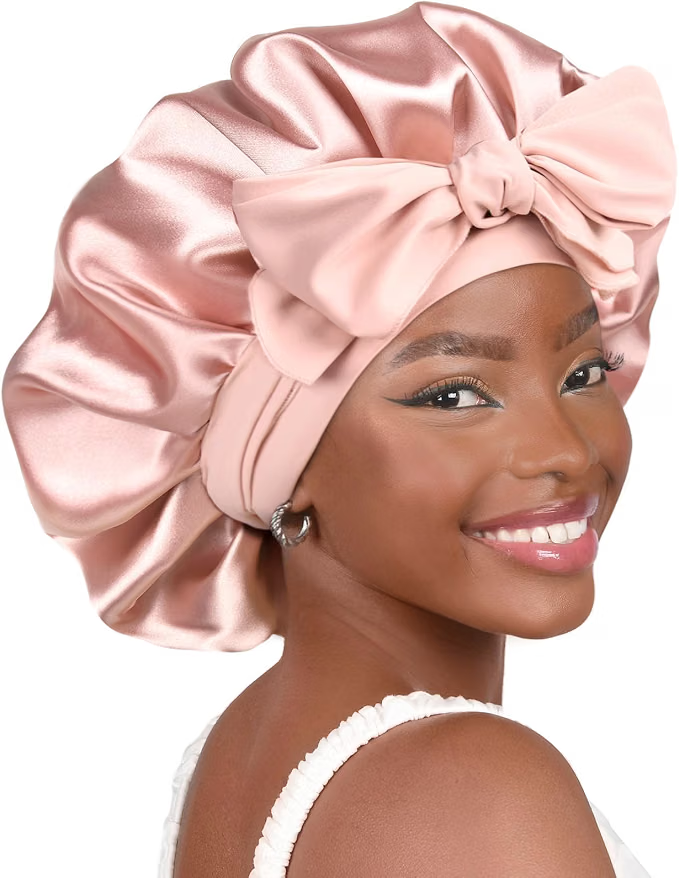
A smoother pillowcase or hair wrap can reduce friction and help preserve curls and styles overnight.It’s an important step in haircare that almost everybody forget.
The AAD also suggests loose braids or a loose “pineapple” style for curly hair to help reduce friction while sleeping.Possible choices:
I love this one on Amazon
Bedsure Satin Pillowcases Queen Set of 2, Similar to Silk Pillow Case Beige
Amazon pick
YANIBEST Adjustable Silk Bonnet for Sleeping Women Double Layer Satin Bonnet, Reduce Friction Prevent Frizz Curly Hair
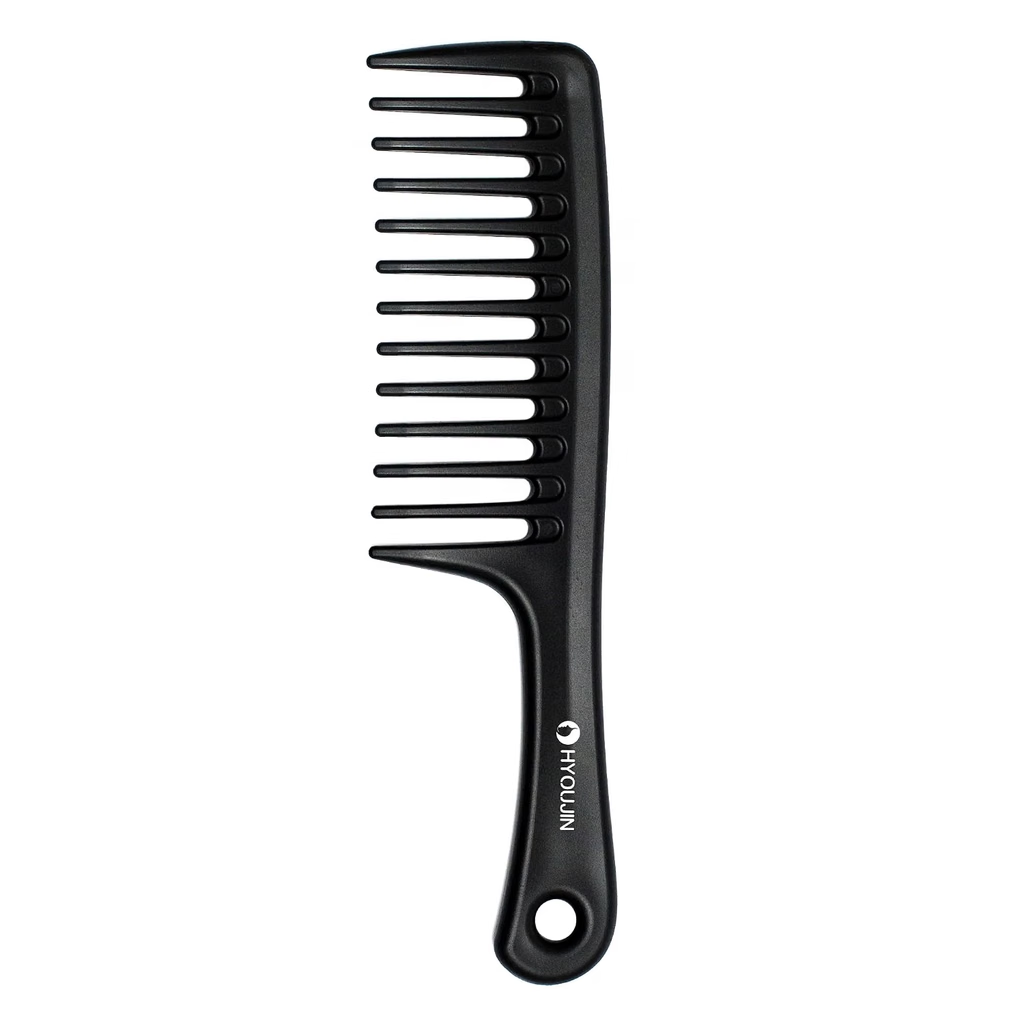
Wide-tooth comb on Amazon
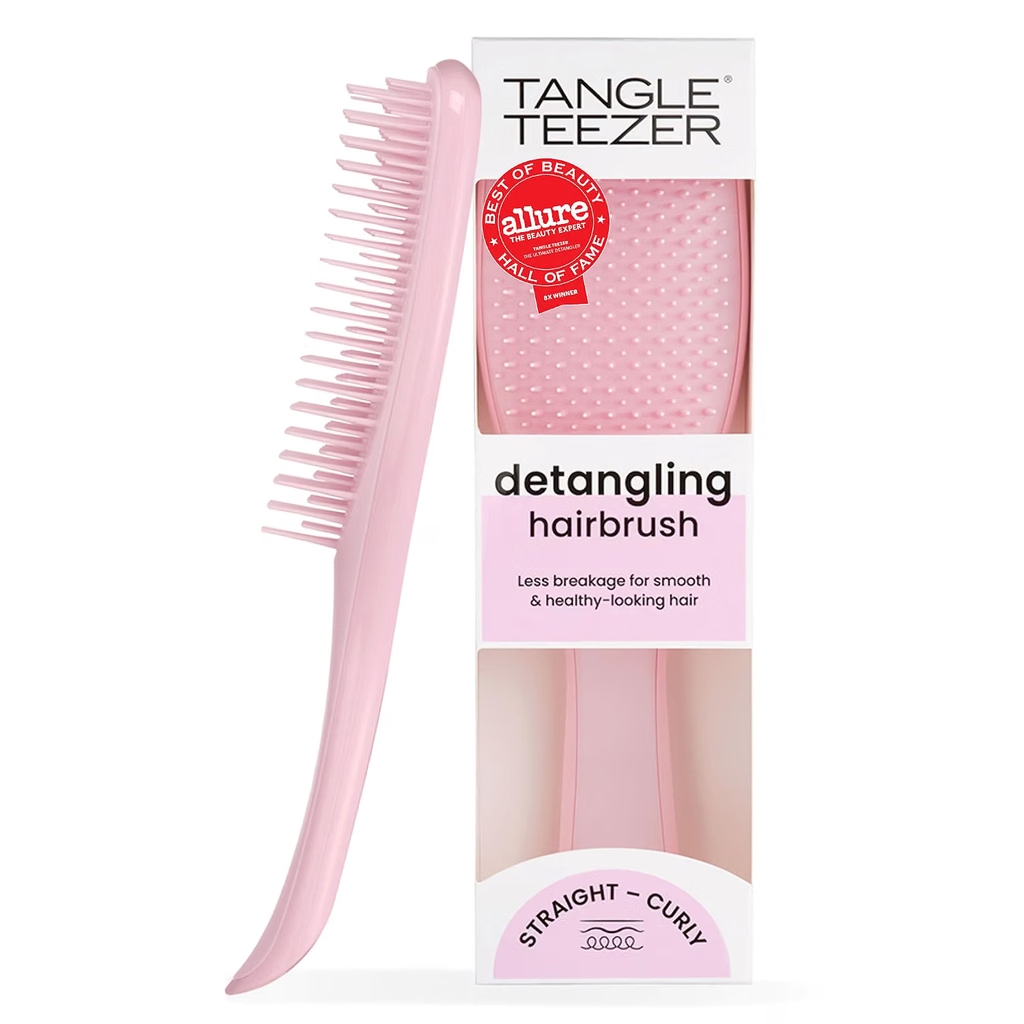
Gentle detangling brush on Amazon
Tangle Teezer Ultimate Detangler Brush, Straight to Wavy, Millennial Pink
6. Essential Haircare Habits That Make a Difference
Products help, but the way you handle your hair may matter just as much.
Clean the Scalp — Not Just the Hair
Oil, sweat, dead skin and styling products collect primarily around the scalp.
Spend your cleansing effort there rather than repeatedly scrubbing already-dry ends.
Condition After Washing
Conditioning can improve softness and reduce the friction involved in combing and styling.
Limit Excessive Heat
More heat is not automatically better.
Research examining hair dryers found progressively greater surface damage as temperatures increased.
Use only as much heat as you need.
Be Gentle With Wet Hair
Hair manipulation, pulling and rough detangling can contribute to breakage.
Use conditioner or a detangling product and work gradually from the ends upward rather than forcing a brush through knots.
Do Not Ignore Split Ends
No cosmetic product can permanently fuse a severely split strand back into completely intact hair.
Conditioning products can temporarily make damaged ends look and feel smoother, but trimming is ultimately the practical way to remove badly split ends.
Protect Your Hair While Sleeping
Long, curly and fragile hair may benefit from reduced friction and loose protective styles overnight.
7. What Do Common Hair Products Actually Do?
The haircare aisle can become confusing because dozens of products appear to promise different results.
Here is the simpler version.
| Product | Main Purpose |
|---|---|
| Shampoo | Cleans scalp and removes oil, sweat and product buildup |
| Conditioner | Improves softness, slip and manageability |
| Hair Mask | Provides more intensive conditioning |
| Leave-In Conditioner | Adds conditioning and assists detangling after washing |
| Heat Protectant | Helps protect hair during heat styling |
| Scalp Serum/Treatment | Depends entirely on its active ingredients and intended use |
| Hair Oil | Adds lubrication, shine and can reduce a dry feel |
| Curl Cream/Gel | Helps define and hold curl patterns and control frizz |
Notice that these products have different jobs.
A hair oil is not a substitute for shampoo. A mask is not necessarily a substitute for conditioner. And a scalp serum cannot compensate for an underlying medical cause of hair loss.
Choose products according to the problem you actually want to solve.
8. Hair Oil: Helpful, But Not Magic
Hair oils are useful for many people because they can improve shine, reduce friction and make dry lengths feel softer.
But oil does not literally add water to dehydrated hair.
For dry hair, it often works best as part of a broader routine that includes conditioning and reduced damage rather than as the only treatment.
Fine or straight hair may need only a tiny amount.
Thicker, curly or coily hair may tolerate heavier application.
9. Stress Can Affect Hair Shedding Too
Hair health is not only about what you apply externally.
Periods of significant physical or emotional stress can sometimes trigger excessive hair shedding known as telogen effluvium. The shedding may begin months after the triggering event rather than immediately.
This does not mean every case of hair thinning is caused by stress. Hair shedding and hair loss can have many causes, and persistent or sudden changes deserve proper evaluation.
Read more about it: 6 skin and hair conditions linked to stress
.
10. What About Hair Growth Supplements?
Supplements marketed for hair growth deserve more caution than shampoos and conditioners.
A deficiency in certain nutrients can contribute to hair problems, but taking increasingly high doses of vitamins does not automatically produce faster or thicker hair.
The American Academy of Dermatology advises that supplements such as iron, zinc or biotin should generally be used to correct an identified deficiency rather than taken indiscriminately. Too much of certain nutrients can also create problems.
Biotin is particularly common in hair supplements, yet the NIH notes that there is limited evidence supporting biotin supplementation for hair, skin and nails in people without a deficiency. High biotin intake can also interfere with some laboratory test results.
So when evaluating a hair supplement, look beyond the words “hair growth” on the label.
Consider:
- The complete ingredient list
- Dosages
- Whether you actually need those nutrients
- Possible medication interactions
- Whether the company makes exaggerated promises
- Whether a healthcare professional has identified a reason for your hair changes
Looking for a Hair-Support Supplement?
Locerin
A nutritional formula designed to complement a broader hair wellness routine. Check the full ingredient list, directions and suitability before use.
Supplements are not a substitute for diagnosing persistent or unexplained hair loss.
11. When Hair Shedding Needs More Than a New Shampoo
A cosmetic routine can improve the appearance, softness and manageability of your hair.
It cannot diagnose or treat every reason for hair loss.
Consider speaking with a dermatologist or healthcare professional if you notice:
- Sudden or dramatic shedding
- Patchy areas of hair loss
- Progressive thinning
- A noticeably widening part
- Pain, inflammation, significant itching or scaling of the scalp
- Hair loss that continues without an obvious explanation
Hair loss has many possible causes, so identifying the cause matters before investing heavily in products or supplements.
12. A Simple Healthy-Hair Routine to Remember
If all of this information feels overwhelming, come back to five basics:
1. Keep your scalp clean according to its needs.
There is no perfect washing schedule for everyone.
2. Condition your lengths and ends.
This is especially important for dry, long, curly, coily or processed hair.
3. Protect the hair you already have.
Reduce unnecessary heat, friction and harsh handling.
4. Choose products for your actual hair type and concerns.
More products do not automatically mean healthier hair.
5. Pay attention to changes in shedding or scalp health.
Persistent hair loss deserves investigation rather than endless product experimentation.
Healthy hair is less about chasing perfection and more about understanding what your hair needs — and caring for it consistently from the scalp to the ends.
You can also like this article: 10 hair care habits that can damage your hair
FAQ: Hair Anatomy and Haircare
What are the three layers of the hair shaft?
The three commonly described layers are the cuticle, cortex and medulla. The medulla may not be present in every hair strand.
Is hair alive?
The visible hair shaft consists of keratinized, non-living cells. The follicle beneath the skin is living tissue involved in producing the hair.
How often should I wash my hair?
There is no universal number. Washing frequency should depend on factors such as scalp oiliness, hair texture, styling-product use and how quickly your hair becomes dirty.
Do curly and coily hair need more moisture?
Curly and tightly coiled hair are often more prone to dryness and breakage, which is why dermatologists commonly recommend adequate conditioning and gentle detangling.
Does heat damage hair?
Repeated high-temperature styling can damage the hair surface and cuticle. Using less heat, reducing frequency and using appropriate protective products can help minimize unnecessary damage.
Can stress cause hair shedding?
Yes. Significant physical or psychological stress can trigger excessive shedding known as telogen effluvium in some people.
Do hair vitamins work?
They may be helpful when someone has a genuine nutrient deficiency, but supplements are not a universal solution for hair loss. Evidence for high-dose biotin in people without deficiency is limit









Post Comment